
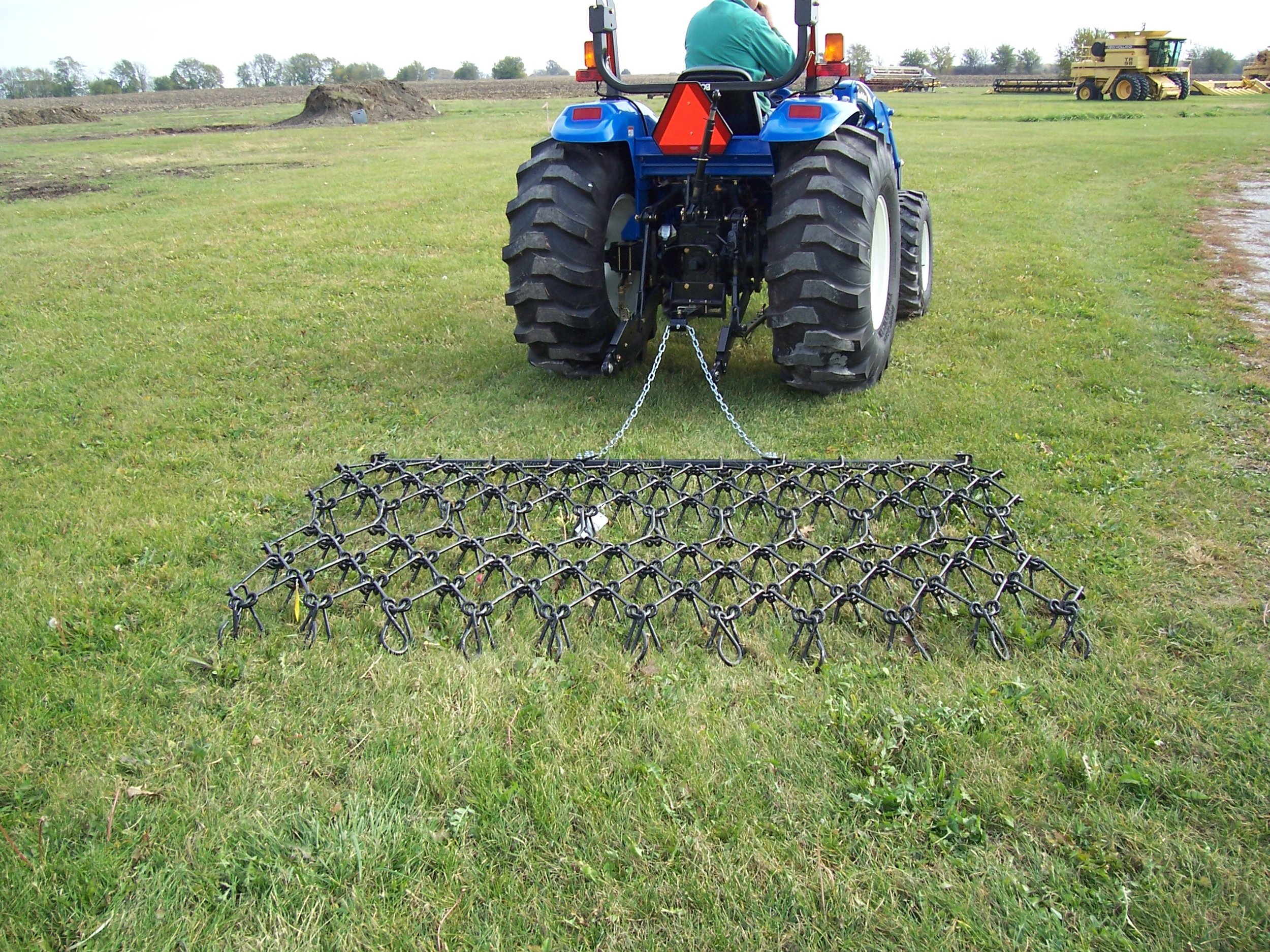
Year Round Harrowing Guide for Pastures
With tight budgets and rising land prices, there is a great need to squeeze the most you can from a livestock operation. Plus, you need equipment that is effective and well built. Both can be found in the Wingfield American Harrow.
Built right here in the USA, we provide the highest-quality harrow on the market today — and we also provide our customers with the information they need to increase their profits. So here is a step-by-step program to maximize your harrow use, and your livestock operation, all year round.
December – January
When you are using winter pastures and need to spread excess hay, having a 3pt harrow or harrow cart makes all the difference. In moist conditions where the hay wants to start rolling, the frame allows you to raise up and take pressure off the harrow mat. This helps filter the material out evenly, without leaving big piles.
Then let the hay dry or freeze, and harrow again to pulverize what remains. By focusing on these areas in the winter, you set up a happy new year for your pastures heading into the spring!
February – March
Early in the spring, harrow pastures to aerate and warm the soil. In 7–10 days, you will notice your more aggressive grasses turn green first. This helps you identify where your weak patches are.
Broadcast seed where the grass is thin, then harrow the area in the same direction as your first pass. This presses the seed into the grooves made in the first pass and covers it with residue.
Wait until the grass establishes itself at 5–6" before you put livestock back on any pasture that has just been reseeded or harrowed.
April – August
You need at least two pastures for proper care using the Wingfield American Harrow. Keep your attention on the areas your livestock spend the most time in. Never let them graze the grass below 3" before you harrow the area to spread the manure. This changes the taste of the grass and encourages the animals to move to different parts of the pasture.
Continue to move the livestock around the pasture with the harrow until they show you they want to go to another pasture — usually by congregating at a gate or reaching over the fence to graze.
After moving the livestock out, harrow the whole area for uniformity by spreading out all the manure piles. This process eliminates the bare spots that promote weed growth, maximizing the grass available for when the animals eventually return.
September – November
If the summer was dry — or too wet — and your pastures were overgrazed or trampled by hoof prints, harrow the pastures to loosen the soil to receive seed by drill or broadcast seeder. If the ground cannot be penetrated by the harrow alone, you can use a tandem disc with the blades set at almost a straight angle. You only want the disc to penetrate 1–2" to loosen the soil.
It is important to run the Wingfield American Harrow after the disc to firm the soil and create a uniform surface for seeding. This process will not harm the existing deep-rooted grasses, and it returns the pastures to uniformity before the weather sets back in.
Remember: manure is fertilizer that helps keep your pasture's growth both uniform and thick. This program will allow you to return your animals up to two times sooner, while also supporting almost double the number of animals grazing per acre. Our goal is for you to maximize the animals per acre while still maintaining a healthy pasture.